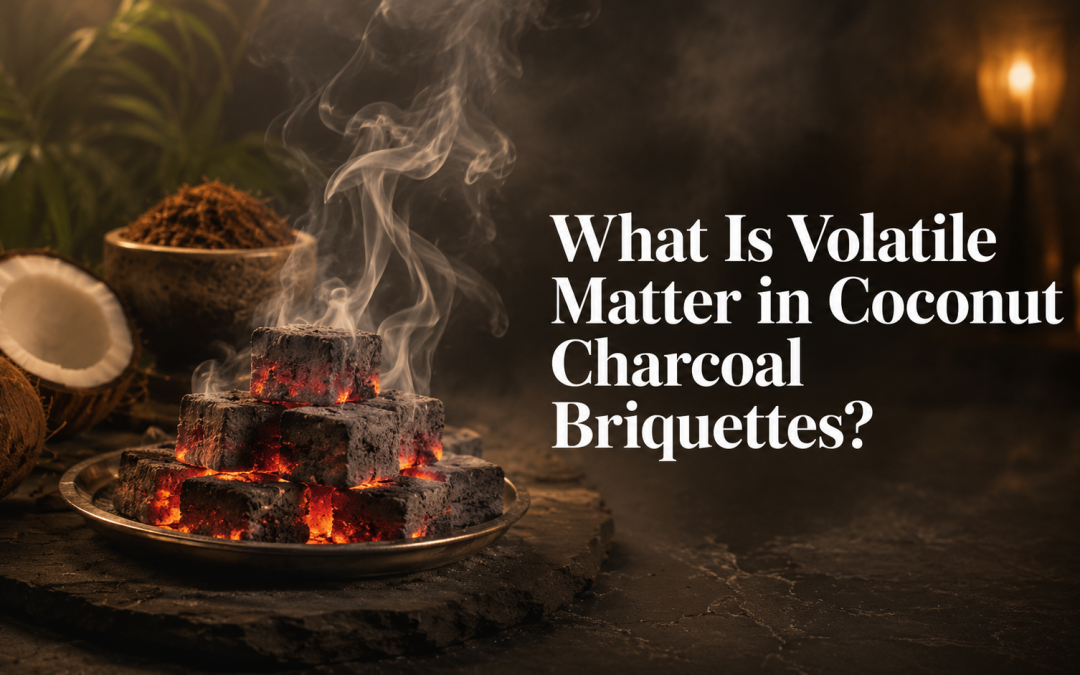
Charcoal volatile matter refers to the compounds released as gas or vapor when coconut charcoal briquettes are heated in a controlled environment without enough oxygen for complete combustion. These compounds may include residual gases, organic vapors, and other substances that remain after the coconut shell carbonization process.
For buyers of coconut charcoal for hookah, volatile matter is an important quality indicator. It can influence ignition behavior, smoke, odor, flame formation, and heat stability during use.
Contents
- How Volatile Matter Is Measured
- Why Volatile Matter Matters
- Effects During Ignition
- Volatile Matter and Carbonization
- Relationship With Fixed Carbon
- How Buyers Should Evaluate It
- Choosing Reliable Coconut Charcoal
- Frequently Asked Questions
- What Is Charcoal Volatile Matter?
- Is Low Volatile Matter Better?
- Does Volatile Matter Affect Hookah Flavor?
- How Is Volatile Matter Tested?
- What Causes High Volatile Matter?
How Volatile Matter Is Measured
Volatile matter is commonly measured through a laboratory procedure known as proximate analysis. A charcoal sample is heated at a specified temperature under controlled conditions. The weight lost during this process, excluding moisture, is calculated as volatile matter.
A typical proximate analysis report may include:
- Moisture content
- Volatile matter
- Ash content
- Fixed carbon
- Total sulfur
These values help importers and distributors compare charcoal samples before approving a bulk order. However, laboratory results should always be reviewed together because one measurement alone does not describe the complete product quality.
Why Volatile Matter Matters
The amount of volatile matter can affect how coconut charcoal behaves during lighting and use. Charcoal with excessive volatile compounds may release more smoke or noticeable odors when it is first heated.
For hookah users, this can be undesirable because unwanted smells may interfere with the tobacco flavor. A product that continues producing smoke after it is fully lit may also indicate inconsistent carbonization or remaining impurities.
Low and controlled volatile matter generally supports cleaner ignition and more stable heat. However, an extremely low value does not automatically mean the charcoal is perfect. Density, moisture, ash, raw materials, and production consistency must also be evaluated.
Effects During Ignition
Most natural charcoal produces some odor while being heated, especially before all sides are fully glowing. The charcoal should be completely lit before being placed on a hookah bowl.
When volatile matter is not properly controlled, users may notice:
- Excessive smoke during lighting
- Strong or unusual odors
- Small flames on the charcoal surface
- Uneven ignition
- Unstable heat during the session
These issues may affect the user experience, particularly in indoor hookah lounges where several batches of charcoal are heated every day.
Volatile Matter and Carbonization
Volatile matter is closely related to the carbonization of coconut shells. During carbonization, raw coconut shells are heated with limited oxygen. This process removes moisture and many natural organic compounds while transforming the shells into charcoal.
If the temperature, duration, or airflow is not properly controlled, some volatile compounds may remain. On the other hand, controlled carbonization helps produce a cleaner charcoal base with more consistent characteristics.
The charcoal is then processed into briquettes using grinding, mixing, molding, drying, and quality-control stages. Uniform production supports consistent hookah charcoal cubes across different batches.
Relationship With Fixed Carbon
Volatile matter and fixed carbon are different measurements, but both are connected to charcoal performance. Fixed carbon represents the solid combustible material that remains after moisture, volatile matter, and ash are accounted for.
A higher fixed-carbon level is often associated with stable heat and longer burning performance. However, buyers should avoid judging the product based only on a single percentage.
For example, charcoal may have a promising fixed-carbon result but still perform poorly due to high moisture, weak density, excessive ash, or inconsistent briquette dimensions.
How Buyers Should Evaluate It
Wholesale buyers should request both laboratory data and physical samples. Lab reports provide measurable specifications, while sample testing shows how the charcoal performs under real conditions.
During testing, buyers can evaluate:
- Smoke and odor during ignition
- Time required for complete lighting
- Heat consistency
- Burning duration
- Ash production
- Cracking or sparking
- Flavor interference
- Strength during shipping and handling
The same burner, bowl, tobacco, and heat management device should be used for each test. This makes comparison more reliable and helps buyers identify differences between suppliers.
Choosing Reliable Coconut Charcoal
Volatile matter is an important part of coconut charcoal quality control because it can affect cleanliness, ignition, and heat performance. Nevertheless, it should always be assessed together with moisture, ash content, fixed carbon, density, and practical burning tests.
Through its charcoal wholesale service, Magnus Java supplies Indonesian coconut charcoal briquettes for distributors, hookah businesses, and private-label brands.
Visit Magnus Java to discuss charcoal specifications, packaging requirements, cube sizes, and wholesale supply for your target market.
Visit our social media:
Instagram: @Magnusjava
Facebook: @Magnusjava
LinkedIn: @Magnusjava
Follow Magnus Java and discover more about Indonesian coconut charcoal for hookah, shisha, and international wholesale markets.
Frequently Asked Questions
What Is Charcoal Volatile Matter?
Charcoal volatile matter refers to compounds released as gas or vapor when charcoal is heated under controlled conditions. It can affect ignition, smoke, odor, and heat stability.
Is Low Volatile Matter Better?
Controlled and relatively low volatile matter generally supports cleaner ignition and less unwanted odor. However, charcoal quality must also be evaluated through moisture, ash, fixed carbon, and density.
Does Volatile Matter Affect Hookah Flavor?
Yes. Excessive volatile matter may create noticeable smoke or odor during lighting, which can interfere with the natural flavor of hookah tobacco.
How Is Volatile Matter Tested?
Volatile matter is measured through proximate analysis. A charcoal sample is heated under controlled laboratory conditions, and the weight loss excluding moisture is calculated.
What Causes High Volatile Matter?
High volatile matter may result from incomplete coconut shell carbonization, inconsistent temperatures, insufficient heating duration, or remaining organic compounds in the charcoal.