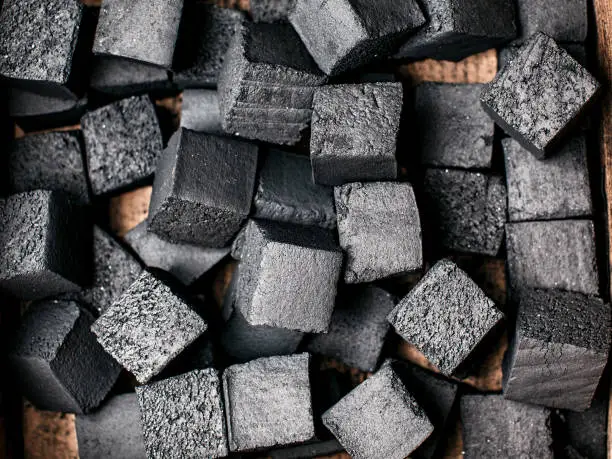
Have you ever wondered how coconut charcoal briquettes made? As we know, coconut charcoal is made to meet international heating needs for shisha and barbecue, and it is certain that food becomes much more delicious with the natural smoky flavor that perfectly clings to your grilled meat. Understanding the manufacturing process of these coconut shell charcoal briquettes is essential. It guarantees you know exactly the quality of the product you are buying and distributing in your home country.
Indonesian coconut charcoal has always been the top choice in the Middle East, Europe, and the United States. Buyers constantly look for this product because it directly solves the end consumer’s needs with proven facts. First, these briquettes have a very long burning time, so your customers do not need to frequently replace the charcoal. Second, the heat generated is highly stable, ensuring shisha flavors remain optimal and barbecue meats cook evenly to the core. Third, premium briquettes do not produce thick smoke, harsh chemical odors, or dangerous sparks during use.
To achieve this premium export quality, the factory must follow a strict, highly controlled production process. Here is the direct and complete process of how we manufacture your coconut charcoal briquette orders.
Contents
- 1. Selecting Fully Mature Coconut Shells
- 2. The Closed Pyrolysis Carbonization
- 3. Crushing and Sieving into Fine Powder
- 4. Mixing with 100% Natural Binder
- 5. Molding and Extrusion Process
- 6. Controlled Industrial Oven Drying
- 7. Strict Quality Control Parameters
- 8. Secure Packaging and Global Shipping
- Frequently Asked Questions (FAQ)
- 1. Why are coconut charcoal briquettes better than regular wood charcoal?
- 2. What is the ideal ash content for export quality briquettes?
- 3. Can I customize the shape and packaging for my own brand?
- 4. How long does the production process take before shipping?
- 5. Why is machine oven drying better than drying under the sun?
1. Selecting Fully Mature Coconut Shells

The quality of the final briquette depends heavily on the initial raw materials. We exclusively use fully mature and completely dry coconut shells. Young coconut shells are strictly avoided because they have high water content and a weak carbon structure. If young shells are used, the resulting briquettes will be brittle, easily crushed, and have a very short burning time.
These raw materials are gathered directly from coastal coconut plantations that receive maximum sun exposure. Once the shells arrive at our facility, we conduct a rigorous sorting process. Our workers manually select and clean the coconut shells, removing any remaining fibers, dirt, and soil. The main goal here is to ensure no foreign materials enter the processing machines, as dirt and impurities will decrease the burning quality and increase the final ash content.
2. The Closed Pyrolysis Carbonization
The second step is carbonization, which is the process of turning raw coconut shells into charcoal. This is the most critical stage. We do not burn the shells in the open air. Instead, we use the pyrolysis method. The coconut shells are placed inside heavy steel drums or specially built brick kilns and burned with a strictly limited oxygen supply.
Burning without free oxygen removes water content and volatile compounds while preserving the dense carbon structure. If exposed to open air, the coconut shells would simply burn into useless white ash. Our team continuously monitors the temperature and observes the color of the smoke exiting the kiln to determine the exact moment the charcoal is perfectly cooked.
Once carbonization is complete, the kilns are tightly sealed and left to cool down naturally for several days. We strictly prohibit the use of water to cool the charcoal quickly. Water quenching damages the carbon structure and forces the charcoal to absorb heavy moisture, which will ultimately make your briquettes very difficult to ignite.
3. Crushing and Sieving into Fine Powder
After the pure charcoal is completely cooled, the next step is grinding. The hard charcoal chunks are fed into heavy duty crushing machines. The objective is not just to break them into smaller pieces, but to grind them repeatedly until they become an extremely fine powder.
The fineness of this powder is the secret to a high density briquette. We use industrial standard sieves measuring 70 to 80 mesh. Super fine charcoal powder creates briquettes with a tight, smooth surface and zero large pores. If the powder is coarse, the resulting briquettes will have visible pores, burn much faster, and become fragile. By using micro fine powder, your ordered briquettes will be highly solid, heavy, and able to withstand shocks and impacts during long container shipments.
4. Mixing with 100% Natural Binder
Pure, dry coconut charcoal powder cannot stick together and form a solid block on its own. To maintain the purity of the burn and ensure no toxic chemicals are involved, we use food grade tapioca starch extracted from cassava as the only binding agent. Using this natural binder guarantees that our charcoal is 100% safe to use and will not alter the aroma or taste when your customers enjoy their shisha.
The tapioca starch is dissolved in hot water until it becomes a thick, sticky liquid. The ratio of the tapioca is kept to the absolute minimum—usually around 3 to 5 percent of the total mixture. The goal is to provide just enough grip to bind the powder without affecting the heat output. A heavy duty mixing machine then blends the charcoal powder and the tapioca liquid continuously until the dough becomes dense, flexible, and ready to be molded.
5. Molding and Extrusion Process
The thoroughly mixed black dough is then transferred into a high pressure hydraulic extrusion machine. This machine presses the dough into the physical shape of the briquette according to your specific market demands. We provide various shapes and sizes that you can customize based on what sells best in your region.
For the shisha and hookah market, cube shapes with precise dimensions of 22x22x22 mm or 25x25x25 mm are the highest in demand. This shape provides excellent stability when placed on top of a shisha bowl. Meanwhile, for the culinary market and commercial barbecue restaurants, hexagonal shapes with a hollow center hole are highly recommended. The center hole allows oxygen to flow smoothly, creating a larger and more aggressive burn. As the molded dough exits the extruder, an automated high speed blade cuts it into perfectly uniform pieces.
6. Controlled Industrial Oven Drying
Freshly cut briquettes still contain high moisture levels from the tapioca liquid mixture. They are not ready to be packed. To reduce this moisture, we dry the wet briquettes using large scale industrial ovens. We never rely on natural sun drying because unpredictable weather leads to inconsistent drying quality.
The wet briquettes are neatly arranged on perforated steel racks and rolled into the closed oven chambers. The temperature inside is kept highly stable at around 80 degrees Celsius for two to three full days. This gradual heating process is crucial to dry the briquettes evenly from the outside to the deepest core, while effectively preventing any micro cracks on the surface. The ultimate target of this stage is to push the moisture content strictly below 5 percent, guaranteeing your briquettes will be incredibly easy to light.
7. Strict Quality Control Parameters
Before we even begin the packaging process, our quality control team conducts thorough inspections. We know your brand reputation is on the line, so we ensure only flawless products leave our facility.
We randomly select briquette samples from the oven for a drop test, dropping them onto a concrete floor. This test ensures the briquettes are strong enough and do not easily shatter. Furthermore, we conduct a burn test to measure the ash content. Premium export quality briquettes must have an ash content below 2.5 percent. We also strictly check the ash color; it must be bright white or light silver. If the ash is dark or brownish, it indicates the raw materials were contaminated with dirt or cheap wood. We only approve batches that pass these strict tests for your order.
8. Secure Packaging and Global Shipping
The final stage is secure packaging. Coconut charcoal briquettes are highly sensitive to humidity. Therefore, our first step is to wrap the approved briquettes tightly in heavy duty, airtight inner plastics. This plastic layer protects the charcoal from the moist sea air during the weeks long ocean transit.
Once sealed in plastic, the briquettes are placed into small inner boxes. The design of these boxes can be fully customized with your own brand logo and identity. These small boxes are then neatly arranged into much thicker and stronger corrugated master cartons. After the master cartons are securely sealed, they are stacked onto wooden pallets, tightly strapped, and loaded into the shipping containers, ready to depart for your destination port.
By understanding this exact, straightforward manufacturing process, you now have the factual foundation to confidently market these high quality coconut charcoal briquettes. We are fully committed to maintaining strict quality standards at every single stage. Selling a consistently premium product is the most effective way to win the market, and we are ready to be the reliable manufacturing partner your business needs.
By understanding this exact, straightforward manufacturing process, you now have the factual foundation to confidently market these high-quality coconut charcoal briquettes. Selling a consistently premium product is the most effective way to win the market.
At Magnus Java, we are fully committed to maintaining strict quality standards at every single production stage. We are ready to be the reliable manufacturing partner your business needs. Contact Magnus Java today to discuss your OEM requirements, current pricing, and next container shipment.
Frequently Asked Questions (FAQ)
1. Why are coconut charcoal briquettes better than regular wood charcoal?
They burn up to three times longer, produce hotter and more consistent heat, and leave minimal ash. Pure coconut charcoal is also 100% smokeless, odorless, and sparkless, making it ideal for indoor shisha and outdoor barbecue.
2. What is the ideal ash content for export quality briquettes?
The ideal ash content is strictly below 2.5%, with a bright white or light grey color. Dark or brown ash indicates contamination with low quality wood or dirt. Low ash ensures a clean smoking and cooking experience.
3. Can I customize the shape and packaging for my own brand?
Yes. We offer full OEM customization. You can select the briquette shape and size (e.g., 22mm cubes, 25mm cubes, or hexagonal). We also customize the packaging, printing your brand’s logo and design on all boxes.
4. How long does the production process take before shipping?
For a standard 20 foot or 40 foot container, production typically takes 2 to 3 weeks. This timeline ensures all quality control steps, including the mandatory 72 hour oven drying process, are executed properly.
5. Why is machine oven drying better than drying under the sun?
Sun drying relies on unpredictable weather and often leaves the briquette’s core wet. Industrial ovens use stable, controlled temperatures to uniformly reduce moisture below 5%, preventing cracks and guaranteeing easy ignition.