
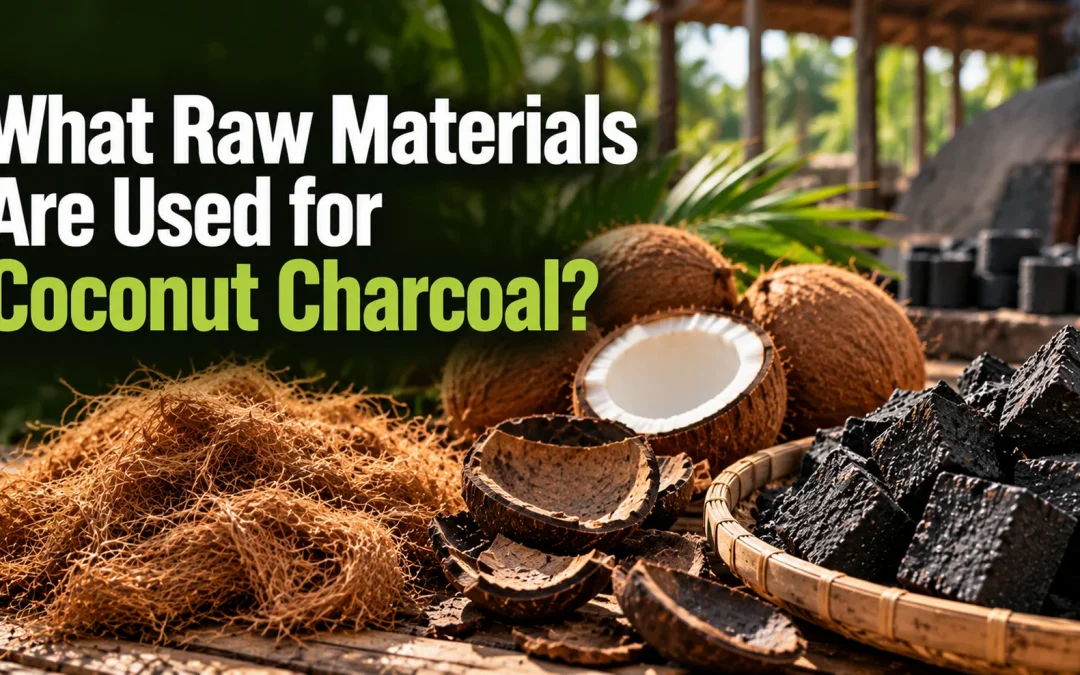
Raw material for coconut charcoal is an important consideration for manufacturers, importers, distributors, and trading companies seeking consistent product quality and reliable supply. Coconut charcoal is commonly produced from coconut shells, an agricultural byproduct that can be transformed into carbon-rich charcoal through controlled carbonization. The quality of the shells, their moisture content, and the processing methods used can influence the characteristics of the finished material.
Understanding the raw material for coconut charcoal helps international buyers assess suppliers, compare product specifications, and make informed sourcing decisions. For businesses serving Europe, the Middle East, and North America, factors such as ash content, moisture, durability, and burning performance may influence purchasing requirements. Knowing how coconut shells are processed and which ingredients may be added during briquette manufacturing also helps buyers evaluate products for wholesale distribution.
Contents
- What Is the Main Raw Material for Coconut Charcoal?
- What Raw Materials Are Used in Coconut Charcoal Briquettes?
- Coconut Shells for Charcoal Production
- Natural Binders for Coconut Charcoal Briquettes
- Water Used in Coconut Charcoal Manufacturing
- How Is Raw Material for Coconut Charcoal Processed?
- 1. Collection and Sorting of Coconut Shells
- 2. Drying and Preparation of Raw Materials
- 3. Carbonization of Coconut Shells
- 4. Crushing and Grinding Coconut Shell Charcoal
- 5. Mixing and Forming Coconut Charcoal Briquettes
- 6. Drying and quality inspection
- What Determines the Quality of Coconut Charcoal Raw Material?
- Why Is Coconut Shell Charcoal Suitable for Wholesale Markets?
- FAQ About Raw Material for Coconut Charcoal
- 1. What is the main raw material for coconut charcoal?
- 2. Are binders always required for coconut charcoal briquettes?
- 3. Is coconut shell charcoal different from wood charcoal?
- 4. How can importers evaluate coconut charcoal quality?
- 5. Where can businesses source raw material for coconut charcoal?
What Is the Main Raw Material for Coconut Charcoal?
The main raw material for coconut charcoal is the hard shell of a mature coconut. After coconut water and meat have been removed for food processing, the remaining shell can be collected and converted into charcoal rather than discarded as agricultural waste.
Coconut shells contain lignocellulosic components, including cellulose, hemicellulose, and lignin. When heated under limited oxygen conditions, these organic components undergo thermal decomposition and leave behind a carbon-rich solid material.
Several characteristics make coconut shells suitable for charcoal production:
- Hard structure: Mature coconut shells have a relatively dense structure that makes them suitable for carbonization.
- Carbon-producing potential: Their organic composition allows them to produce charcoal when processed under appropriate conditions.
- Agricultural availability: Coconut-producing countries, including Indonesia, generate coconut shells through food processing and agricultural activities.
- Resource utilization: Converting coconut shells into charcoal creates additional value from an agricultural byproduct.
However, not all coconut shells produce the same results. Moisture content, contamination, storage conditions, and carbonization parameters can affect the final charcoal. For importers and distributors, evaluating these factors is an important step when sourcing coconut shell charcoal raw material for commercial production or wholesale distribution.
What Raw Materials Are Used in Coconut Charcoal Briquettes?
Although coconut shells are the primary raw material for coconut charcoal, manufacturing briquettes may require additional ingredients. These generally include processed charcoal powder, a suitable binder, and water used during mixing.
The exact formulation depends on the manufacturing method and the intended product specifications.
Coconut Shells for Charcoal Production
Coconut shells provide the carbon source used in coconut shell charcoal briquettes. Manufacturers collect, sort, and prepare the shells before carbonization. Once the shells have been converted into charcoal and cooled, the material is crushed and ground into smaller particles. The resulting charcoal powder can then be used to manufacture briquettes. For hookah and shisha applications, particle consistency is an important consideration because it can influence mixing, compression, and the uniformity of the finished briquettes.
Natural Binders for Coconut Charcoal Briquettes
Binders help charcoal particles hold their shape during briquette manufacturing. A common option is a starch-based binder, which may be derived from tapioca, corn, or other suitable starch sources. The binder is mixed with charcoal powder and water to create a workable mixture that can be compressed into the desired shape. The type and quantity of binder depend on the manufacturer’s formulation, equipment, and product requirements. Excessive or unsuitable binder use may affect the final product’s composition and performance. Importers and distributors should ask suppliers about binder specifications when these details are relevant to their purchasing standards.
Water Used in Coconut Charcoal Manufacturing
Water is commonly used to distribute the binder and help create a consistent mixture during briquette production. It is a processing ingredient rather than the primary carbon-producing raw material. After the mixture is compressed into briquettes, the products must be dried to achieve the required moisture level. Proper drying helps maintain product stability during storage, packaging, and transportation. The amount of water needed depends on the charcoal powder, binder formulation, and production method.
How Is Raw Material for Coconut Charcoal Processed?
The coconut charcoal manufacturing process transforms raw coconut shells into charcoal suitable for further processing or commercial use. Each production stage can influence the quality and consistency of the final product.
1. Collection and Sorting of Coconut Shells
Coconut shells are collected from farms, coconut processing facilities, and other sources. Manufacturers sort the material to remove excessive dirt, unsuitable pieces, and foreign objects. Proper sorting helps reduce contamination and improves the consistency of the raw material entering production.
2. Drying and Preparation of Raw Materials
The shells are prepared for carbonization by reducing excess moisture when necessary. Moisture management is important because wet shells can require more energy during processing and make production conditions less consistent. The preparation method depends on the initial condition of the shells and the manufacturer’s equipment.
3. Carbonization of Coconut Shells
Carbonization involves heating coconut shells under limited oxygen conditions to produce charcoal. Unlike ordinary combustion, which consumes material through burning, carbonization aims to retain a carbon-rich solid residue. Temperature, heating duration, oxygen control, and equipment design all influence the resulting charcoal. Poorly controlled carbonization can produce inconsistent material and undesirable levels of residual volatile compounds.
4. Crushing and Grinding Coconut Shell Charcoal
After carbonization and cooling, the charcoal is crushed and ground into smaller particles. Particle size distribution is important when the charcoal will be used for briquette production. Suitable and consistent particle sizes help manufacturers manage mixing and compression more effectively.
5. Mixing and Forming Coconut Charcoal Briquettes
For briquette production, charcoal powder is mixed with an appropriate binder and water when required. The mixture is then compressed into the specified shape, such as cubes or flats. Compression pressure, mixture consistency, and equipment performance can influence briquette density, shape, and durability.
6. Drying and quality inspection
Freshly formed briquettes are dried to achieve the required moisture specification. Manufacturers then inspect the finished products against agreed quality criteria.
Depending on the intended application, these criteria may include:
- Moisture content
- Ash content
- Fixed carbon
- Briquette dimensions and weight
- Durability and resistance to breakage
- Ignition and burning performance
Testing methods and acceptance limits should be agreed upon between the supplier and buyer before large wholesale orders are placed.
What Determines the Quality of Coconut Charcoal Raw Material?
The quality of raw material for coconut charcoal depends on more than the source of the shells. Preparation, carbonization, briquette formulation, and quality control also contribute to the final product.
The following factors are important when evaluating coconut charcoal suppliers.
- Moisture content: Excessive moisture can affect processing efficiency, storage, and the performance of finished briquettes.
- Cleanliness: Soil, foreign particles, and other contaminants can compromise raw material consistency.
- Carbonization conditions: Controlled heating and oxygen management help manufacturers maintain more consistent charcoal characteristics.
- Particle size: Uniform charcoal powder can support consistent briquette formation and compression.
- Binder formulation: Binder type and quantity can influence briquette strength and finished product composition.
- Quality testing: Documented test results help buyers assess whether products meet their specifications.
For importers and trading companies, supplier evaluation should go beyond a basic description of the raw material. Buyers can request representative samples, technical specifications, relevant laboratory test results, packaging information, and confirmation of production capacity. These checks are particularly useful when establishing recurring shipments for international distribution.
Why Is Coconut Shell Charcoal Suitable for Wholesale Markets?
Coconut shell charcoal has commercial potential because it uses an agricultural byproduct and can be manufactured into products for different applications. In the hookah and shisha sector, coconut charcoal briquettes are commonly marketed for their shape consistency, density, and combustion characteristics when manufactured to suitable specifications. Market requirements can differ across Europe, the Middle East, and North America. Some buyers prioritize ash content and burning duration, while others focus on dimensions, packaging, product consistency, and import documentation.
For businesses purchasing wholesale coconut charcoal, it is important to verify product specifications rather than assume all coconut charcoal performs identically. Buyers should also clarify packaging requirements, minimum order quantities, delivery arrangements, and applicable import requirements with their suppliers. Working with an experienced Indonesian supplier can help international businesses explore coconut-derived products and discuss their sourcing needs.
Magnus Java offers coconut-based products for commercial markets. Businesses interested in Indonesian coconut derivatives can explore the available product range and contact the company to discuss their requirements.
Explore cocofiber and other products from Magnus Java.
Visit our social media:
Instagram: @Magnusjava
Facebook: @Magnusjava
LinkedIn: @Magnusjava
Follow Magnus Java and discover more about Indonesian coconut charcoal for hookah, shisha, and international wholesale markets.
FAQ About Raw Material for Coconut Charcoal
1. What is the main raw material for coconut charcoal?
The main raw material for coconut charcoal is the hard shell of a mature coconut. The shells are heated under controlled, oxygen-limited conditions to produce charcoal.
2. Are binders always required for coconut charcoal briquettes?
Not always. Binders are commonly used when manufacturing briquettes from charcoal powder because they help particles hold their shape. Their use depends on the manufacturing process and the intended product.
3. Is coconut shell charcoal different from wood charcoal?
Yes. Coconut shell charcoal is produced from coconut shells, while wood charcoal is made from wood. Their characteristics can differ according to the raw material and production conditions, so buyers should compare product specifications before purchasing.
4. How can importers evaluate coconut charcoal quality?
Importers can review product specifications, laboratory test results, samples, moisture content, ash content, fixed carbon, dimensions, packaging, and batch consistency. Acceptance criteria should be agreed upon with the supplier.
5. Where can businesses source raw material for coconut charcoal?
Businesses can explore suppliers in coconut-producing countries such as Indonesia. Before placing an order, buyers should verify the supplier’s product range, manufacturing capabilities, quality controls, export documentation, and ability to meet the required specifications.