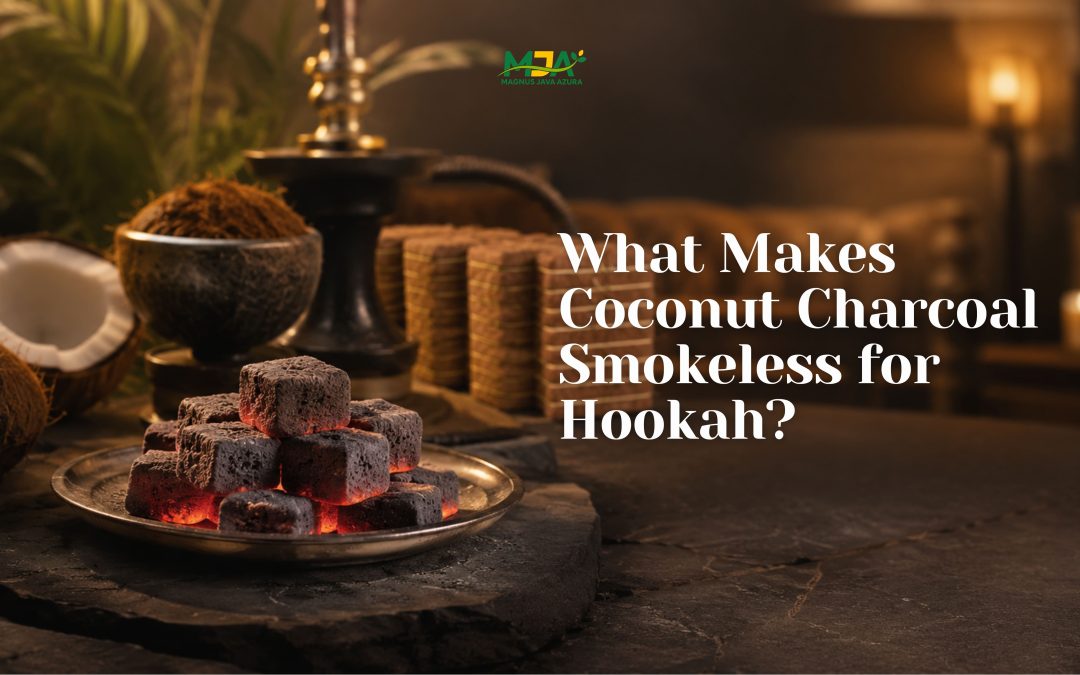
Smokeless coconut charcoal for hookah is made through the right combination of raw material quality, proper carbonization, low moisture content, and clean briquette production. When these factors are controlled properly, coconut charcoal can burn with minimal smoke, low odor, and stable heat.
At Magnus Java, we understand that hookah charcoal quality is not only judged by how long it burns. For hookah users, one of the most important things is a clean smoking experience. The charcoal should heat the shisha without adding unwanted smell, excessive smoke, or unstable heat.
That is why smokeless performance has become one of the key characteristics buyers look for when choosing premium coconut charcoal briquettes.
Contents
- Why Coconut Shell Is Good for Hookah Charcoal?
- Proper Carbonization Reduces Smoke
- Low Moisture Content Helps Charcoal Burn Cleaner
- Low Ash Content Supports Cleaner Hookah Sessions
- Binder Quality Also Matters
- Density Affects Smoke and Heat Stability
- Why Smokeless Charcoal Is Important for Hookah?
- Signs of Good Smokeless Coconut Charcoal
- Smokeless Coconut Charcoal for Hookah Businesses
- FAQ
- 1. What makes coconut charcoal smokeless for hookah?
- 2. Does smokeless coconut charcoal have no smoke at all?
- 3. Why is low moisture important in hookah charcoal?
- 4. Can poor binder quality cause smoke?
- 5. Is coconut charcoal better for hookah than regular charcoal?
Why Coconut Shell Is Good for Hookah Charcoal?
Coconut shell is naturally hard and dense, making it a strong raw material for hookah charcoal briquettes. When processed properly, coconut shell charcoal can produce stable heat and cleaner burning performance.
Unlike some low-quality charcoal materials, coconut shell can be turned into briquettes that burn evenly with less smoke. This makes it suitable for hookah because the charcoal should support the session without disturbing the flavor of the shisha.
We use coconut shell as the main material because it offers:
- Good heat performance
- Long burning time
- Low smoke potential
- Stable briquette structure
- More sustainable raw material usage
These qualities make coconut charcoal a preferred choice for hookah lounges, shisha distributors, and private label hookah charcoal brands.
Proper Carbonization Reduces Smoke
One of the biggest factors that makes coconut charcoal smokeless is proper carbonization. Carbonization is the process of heating coconut shells in a controlled environment to turn them into charcoal.
If the carbonization process is not done properly, the charcoal may still contain impurities or volatile substances that can create smoke and odor during burning.
Premium coconut charcoal needs proper carbonization to remove unnecessary compounds and improve burning quality. When the process is controlled well, the charcoal becomes cleaner, more stable, and more suitable for hookah use.
At Magnus Java, we understand that clean burning starts from this stage. Good carbonization helps create charcoal that produces less smoke and better heat consistency.
Low Moisture Content Helps Charcoal Burn Cleaner
Moisture content also has a major effect on smoke level. Charcoal with high moisture can be harder to ignite and may produce more smoke when heated.
For hookah, this can create an uncomfortable experience because users expect clean heat, not smoke from the charcoal itself. High moisture can also reduce burning efficiency and make the charcoal less stable.
That is why proper drying is important after the briquettes are formed. Well-dried coconut charcoal briquettes can ignite more easily, burn more evenly, and produce less smoke during use.
Low moisture helps the charcoal deliver:
- Cleaner ignition
- Better heat output
- Lower smoke
- More stable burning
- Better user experience
Low Ash Content Supports Cleaner Hookah Sessions
Ash content is another important factor in smokeless coconut charcoal. While ash is not the same as smoke, high ash can affect airflow and make the hookah session less comfortable.
Premium coconut charcoal should produce minimal ash so the heat can stay stable and the charcoal can perform efficiently. Too much ash may cover the surface of the briquette, reduce airflow, and disturb heat transfer.
For hookah lounges and shisha users, low ash charcoal is easier to manage and creates a cleaner session. It also makes the product feel more premium because users do not need to constantly clean or adjust the charcoal.
Binder Quality Also Matters
Coconut charcoal briquettes are made by pressing charcoal powder with a binder. The binder helps the briquette keep its shape and structure during storage, shipping, and burning.
However, the binder must be selected and used carefully. Poor binder quality or excessive binder composition can cause smoke, odor, or poor burning performance.
Smokeless hookah charcoal requires a balanced formula. The briquette must be strong enough to hold its shape, but clean enough to burn without disturbing the hookah experience.
At Magnus Java, we understand that formulation matters. The right balance helps create briquettes that are solid, stable, and cleaner when burned.
Density Affects Smoke and Heat Stability
Density plays an important role in how coconut charcoal burns. A dense briquette usually burns more evenly and produces steady heat. If the briquette is too soft or poorly pressed, it may burn too quickly, break easily, or create unstable heat.
For hookah use, stable heat is important because it affects the flavor and comfort of the session. Charcoal that burns too fast or unevenly may overheat the shisha or require frequent replacement.
A well-pressed coconut charcoal briquette can help maintain:
- Stable heat
- Longer burning time
- Lower breakage
- Cleaner performance
- Better hookah control
This is why density is one of the quality factors we pay attention to in coconut charcoal briquette production.
Why Smokeless Charcoal Is Important for Hookah?
Hookah users want the flavor to come from the shisha, not from the charcoal. If charcoal produces too much smoke or odor, it can interfere with the taste and reduce the overall experience.
Smokeless coconut charcoal helps create a cleaner and smoother hookah session. It allows users to enjoy the aroma, flavor, and heat balance without unwanted charcoal smell.
For businesses, this is even more important. Hookah lounges, distributors, and retail brands need charcoal that customers can trust. Consistent smokeless performance can improve customer satisfaction and support repeat purchases.
Signs of Good Smokeless Coconut Charcoal
Good smokeless coconut charcoal usually has several visible and performance-based characteristics.
Buyers can look for:
- Low smoke during ignition and use
- Minimal odor
- Stable heat output
- Strong briquette structure
- Low ash residue
- Long burning time
- Consistent shape and size
These signs show that the charcoal has been produced with better raw material selection, proper carbonization, controlled drying, and balanced formulation.
For bulk buyers, consistency is very important. A good sample is not enough if the next shipment performs differently. That is why production control and quality consistency matter.
Smokeless Coconut Charcoal for Hookah Businesses
For hookah businesses, smokeless coconut charcoal can help improve product value and customer trust.
Hookah lounges need charcoal that is easy to use and comfortable for daily operation. Distributors need stable quality for repeat orders. Private label brands need charcoal that matches their packaging promise and market positioning.
We support buyers who need coconut charcoal briquettes for:
- Hookah lounges
- Shisha distributors
- Retail charcoal brands
- Wholesale supply
- Private label packaging
- Export markets
Our focus is to provide coconut charcoal that supports clean performance, stable heat, and reliable supply.
If you are looking for smokeless coconut charcoal for hookah, we are ready to support your sourcing needs from Indonesia.
View this post on Instagram
FAQ
1. What makes coconut charcoal smokeless for hookah?
Coconut charcoal becomes smokeless when it is made from quality coconut shell, carbonized properly, dried well, and formed with a clean briquette formula.
2. Does smokeless coconut charcoal have no smoke at all?
It may still produce slight smoke during ignition, but high-quality coconut charcoal should produce minimal smoke during normal use.
3. Why is low moisture important in hookah charcoal?
Low moisture helps the charcoal ignite better, burn cleaner, and produce less smoke.
4. Can poor binder quality cause smoke?
Yes, poor binder quality or excessive binder use can create smoke, odor, and unstable burning performance.
5. Is coconut charcoal better for hookah than regular charcoal?
Coconut charcoal is often preferred for hookah because it can burn longer, produce steady heat, and create less smoke when made properly.