Hookah Charcoal – Sustainability has become an important topic in the global hookah industry. As environmental awareness grows, businesses and consumers increasingly evaluate the impact of the products they use. For this reason, shisha charcoal made from coconut shells has gained strong recognition as an eco-friendly option.
This article explains why coconut-based shisha charcoal supports sustainability while maintaining high performance.
Contents
- Hookah Charcoal is Support Sustainability
- Reducing Environmental Waste
- Cleaner Burning and Higher Efficiency
- Supporting Responsible Supply Chains
- Long-Term Environmental Benefits
- Meeting Eco-Conscious Market Demand
- 1. Why is coconut-based hookah charcoal considered eco-friendly?
- 2. How does sustainable hookah charcoal benefit businesses?
- 3. Does eco-friendly hookah charcoal affect heat performance?
Hookah Charcoal is Support Sustainability
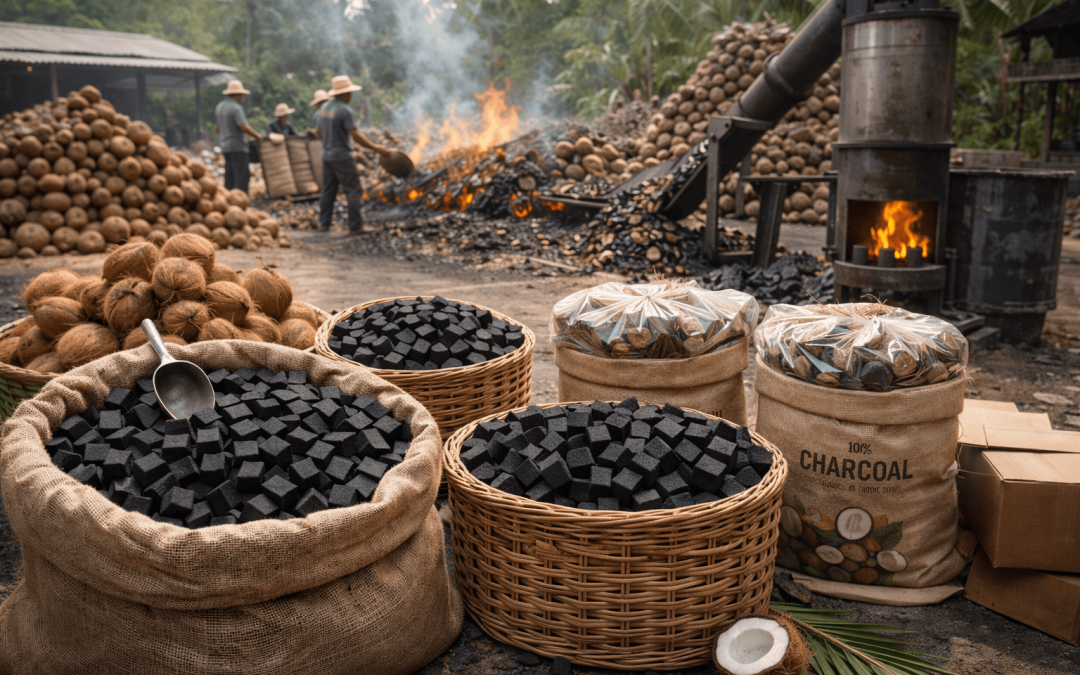
Coconut hookah charcoal comes from coconut shells, a renewable agricultural by-product. Instead of treating these shells as waste, producers transform them into valuable charcoal. Therefore, the production process reduces waste while preserving natural resources.
In comparison, traditional wood-based charcoal often depends on cutting trees. Coconut-based shisha charcoal avoids this practice and supports responsible resource management.
Reducing Environmental Waste
Coconut-producing regions generate large amounts of shell waste every year. By converting this material into shisha charcoal, producers reduce landfill accumulation and environmental pollution. As a result, coconut charcoal supports a circular economy model.
Moreover, this process benefits agricultural communities by creating additional value from existing resources.
Cleaner Burning and Higher Efficiency
Coconut shisha charcoal burns cleaner than many alternatives. It produces minimal ash and releases consistent heat over longer periods. Consequently, users need fewer charcoal pieces per session.
This efficiency reduces overall consumption and lowers waste generation. In addition, cleaner burning improves the user experience and simplifies post-session cleanup.
Supporting Responsible Supply Chains
Sustainability extends beyond the product itself. Coconut shisha charcoal often comes from supply chains that emphasize ethical sourcing and controlled production. Therefore, businesses can align their operations with global sustainability standards.
Furthermore, modern production methods reduce emissions and improve energy efficiency. These practices strengthen the environmental advantages of coconut-based shisha charcoal.
Long-Term Environmental Benefits
Coconut trees produce fruit for decades without being cut down. This long lifecycle makes coconut-based shisha charcoal a sustainable long-term solution. As a result, producers can meet growing market demand without depleting natural resources.
In addition, stable coconut supply reduces pressure on forest ecosystems, supporting environmental balance over time.
Meeting Eco-Conscious Market Demand
Consumers and businesses increasingly favor environmentally responsible products. Hookah lounges and distributors respond by sourcing eco-friendly shisha charcoal that meets performance expectations.
By choosing coconut-based shisha charcoal, businesses enhance brand credibility while contributing to environmental protection. This balance supports both market growth and sustainability goals.
Conclusion
In conclusion, coconut-based shisha charcoal offers a responsible alternative for the hookah industry. Through renewable raw materials, waste reduction, cleaner burning, and sustainable supply chains, it minimizes environmental impact without sacrificing performance. As sustainability continues to shape global markets, coconut hookah charcoal remains a smart and eco-conscious choice.
If you are looking for high-quality and eco-friendly hookah charcoal, Magnus Java is ready to support your business. Operating under PT Magnus Java Azura, Magnus Java is one of the best suppliers and producers of coconut derivative products in Indonesia, serving both local and international markets.
Magnus Java focuses on sustainable sourcing, controlled production, and consistent quality to meet the growing global demand for environmentally responsible hookah products.
Contact Magnus Java
Phone / WhatsApp:
(+62) 851 7347 2468
(+62) 813 8982 7979
Partner with Magnus Java to secure sustainable hookah charcoal that supports both performance and environmental responsibility.
Frequently Asked Questions (FAQ)
1. Why is coconut-based hookah charcoal considered eco-friendly?
Coconut-based hookah charcoal uses agricultural by-products instead of wood. As a result, it reduces waste and avoids deforestation. This process supports sustainable resource use and environmental protection.
2. How does sustainable hookah charcoal benefit businesses?
Sustainable hookah charcoal helps businesses meet environmental expectations while maintaining consistent performance. In addition, it strengthens brand credibility among eco-conscious customers and partners.
3. Does eco-friendly hookah charcoal affect heat performance?
No, eco-friendly coconut hookah charcoal delivers stable heat, long burn time, and low ash content. Therefore, sustainability does not compromise performance or user experience.